Understanding Baseball Pitch Counts and Rest Rules
A parent-friendly guide to Little League pitch count limits by age, mandatory rest days, and why these rules exist. Includes the official thresholds for ages 6-16.
Why Pitch Counts Matter
Young arms are still growing. The bones, tendons, and ligaments in a child's throwing arm are not fully developed, and overuse is one of the leading causes of youth baseball injuries. Pitch count rules exist because they are the single best tool we have to prevent a 10-year-old from throwing too many pitches on a Tuesday and then pitching again on Thursday before their arm has recovered.
These are not suggestions. In Little League, pitch counts are mandatory, enforced by rule, and tracked by a designated scorekeeper at every game. If you are a parent or coach, knowing these numbers is part of the job.
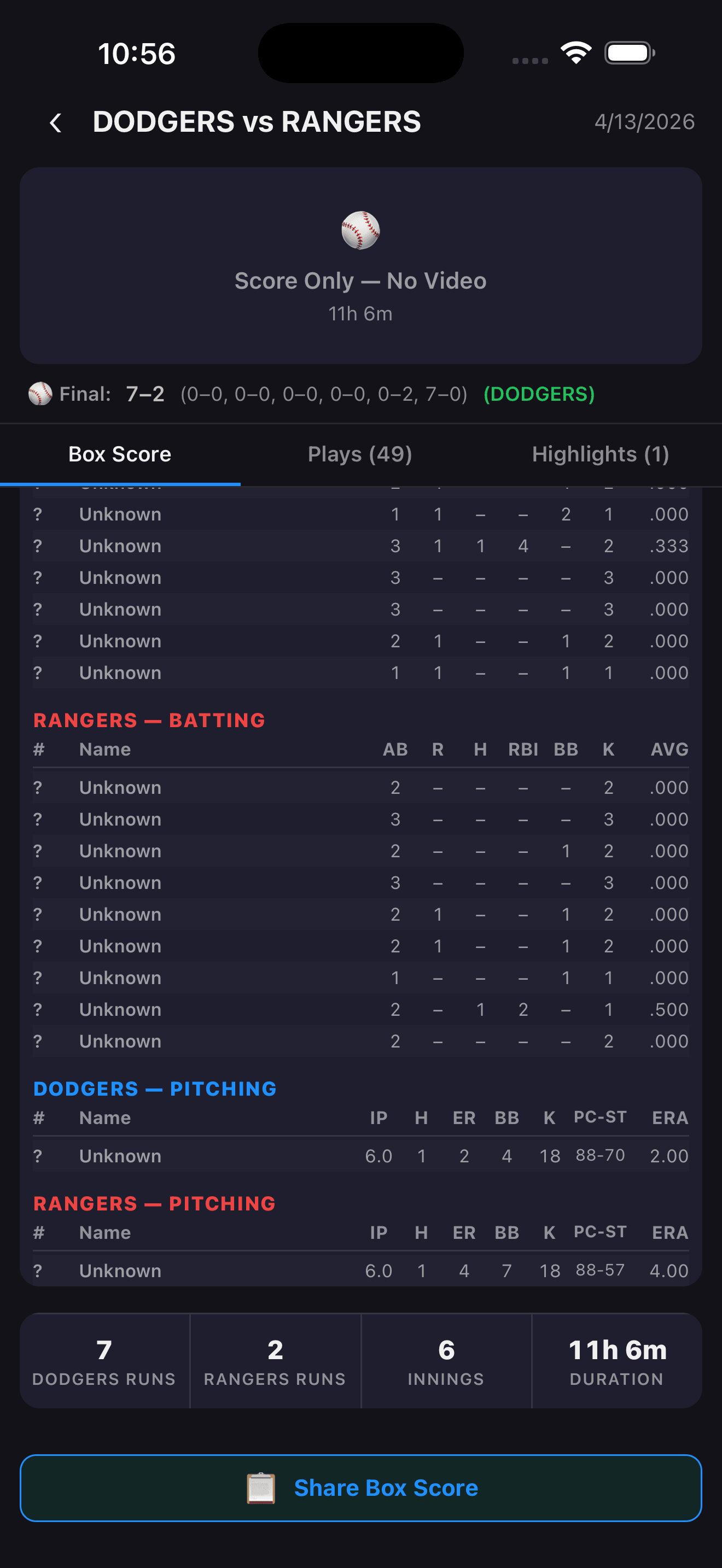
Maximum Pitches Per Day
Every pitcher has a daily limit based on their league age — the age they will turn during the current calendar year.
| League Age | Max Pitches Per Day |
|---|---|
| 6-8 | 50 |
| 9-10 | 75 |
| 11-12 | 85 |
| 13-16 | 95 |
When a pitcher reaches their limit, the manager must remove them from the mound. The pitcher can stay in the game at another position, but they are done pitching for the day. There is one small exception: if a pitcher reaches the limit mid-batter, they may finish that batter before leaving the mound.
Mandatory Rest Days
Hitting the daily limit is only half the equation. The number of pitches thrown also determines how many days the pitcher must rest before pitching again. The thresholds below are from the Little League Official Regulations. Other organizations (USSSA, Cal Ripken, Babe Ruth, travel ball) may have different limits — always check your league's specific rules. Some are stricter, some are more lenient, and some use innings-based limits instead of pitch counts.
For Little League players age 14 and under:
| Pitches Thrown | Rest Required |
|---|---|
| 1-20 | No rest needed |
| 21-35 | 1 day |
| 36-50 | 2 days |
| 51-65 | 3 days |
| 66+ | 4 days |
For players age 15-16, the thresholds shift upward:
| Pitches Thrown | Rest Required |
|---|---|
| 1-30 | No rest needed |
| 31-45 | 1 day |
| 46-60 | 2 days |
| 61-75 | 3 days |
| 76+ | 4 days |
"Rest days" means calendar days. If a 12-year-old throws 70 pitches on Monday, they need 4 calendar days of rest and cannot pitch again until Saturday.
The Three-Day Consecutive Rule
Regardless of pitch count, no player may pitch on three consecutive days. Even if a player only threw 10 pitches on Monday and 10 on Tuesday, they cannot pitch on Wednesday. This is an absolute limit — no exceptions, no thresholds.
What This Looks Like in Practice
Here is a realistic scenario. Your 11-year-old starts on the mound on Saturday and throws 55 pitches over three innings.
- Daily limit: 85 pitches (age 11-12). They are well under the cap — no removal required.
- Rest required: 55 pitches falls in the 51-65 range, which means 3 days of rest.
- Next eligible day: Wednesday (Sunday, Monday, Tuesday are rest days).
If the team has a game on Tuesday? Someone else pitches. There is no "but they feel fine" exception. The rule is the rule, and it is the manager's responsibility to enforce it — even if the scorekeeper or umpire does not remind them.
The Catcher-Pitcher Connection
There is an additional restriction that catches people off guard. If a player catches for 4 or more innings in a game, they are not allowed to pitch that day. Going the other direction, if a pitcher throws 21 or more pitches (for ages 14 and under), they cannot move to catcher afterward.
This rule prevents the two most arm-intensive positions from being stacked on the same player in a single game.
Softball Is Different
If your child plays softball instead of baseball, the pitching rules work differently. Softball uses innings pitched instead of pitch counts. In Minor League and Little League Majors softball, a pitcher can throw up to 12 innings in a day but must rest one calendar day after pitching 7 or more innings. Junior and Senior League softball has no pitching limits.
Who Tracks All of This?
Every league must designate an official pitch count recorder — usually the scorekeeper. The recorder must provide the current count when asked by either manager or any umpire. But here is the key point: the manager is responsible for knowing when their pitcher must come out. If the recorder forgets to notify them, the manager is still on the hook.
This is why tracking pitch counts accurately matters. A missed count can lead to a rule violation, a protest, or — worst case — an overuse injury that could have been prevented.
Track Pitch Counts with Stathlon
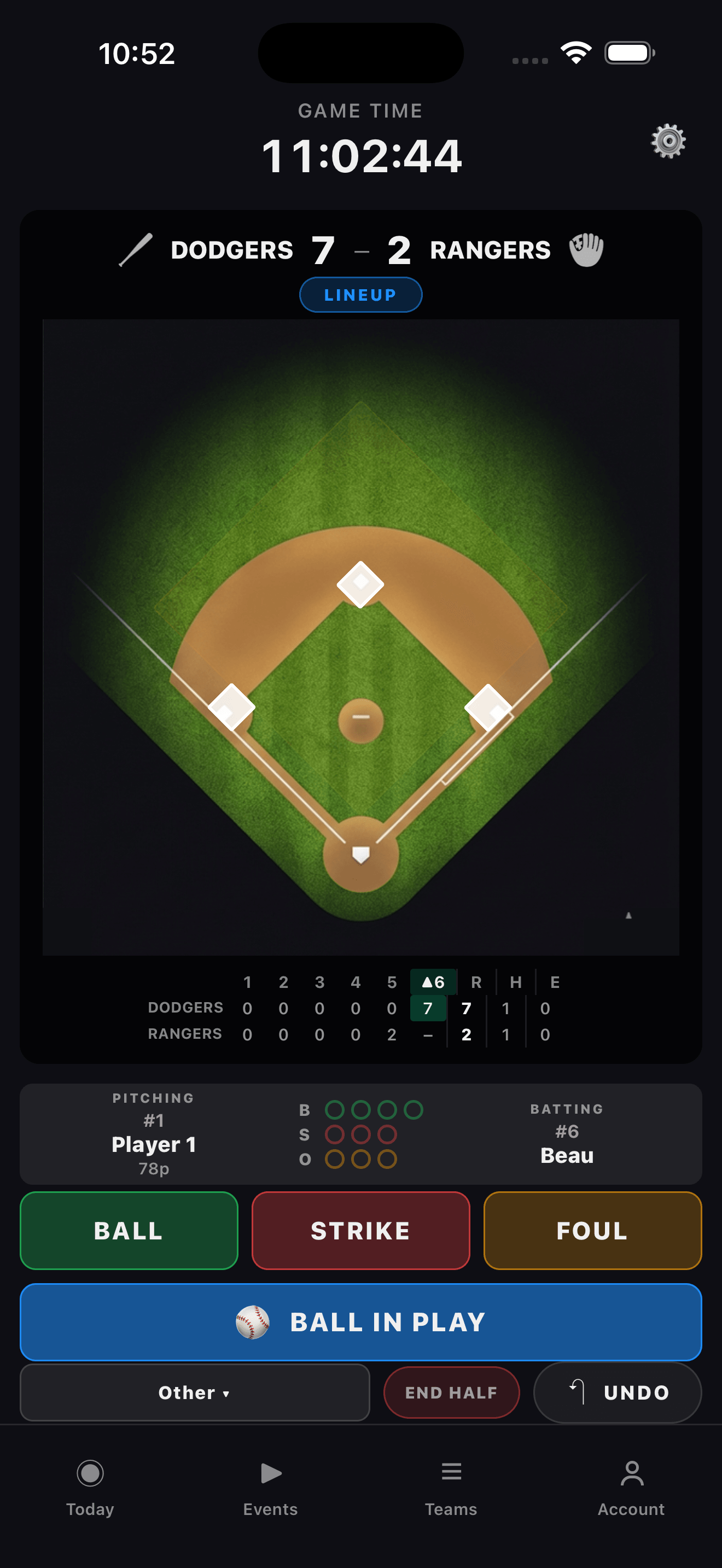
Keeping a manual tally of pitches works, but it is easy to lose count during a fast-moving game. Stathlon tracks pitch counts automatically as you score the game — every pitch is logged, rest day calculations happen in real time, and you always know exactly where each pitcher stands against their daily limit.
Ready to put this into practice?
Stathlon lets you score flag football games with a tap — touchdowns, PAT choices, safeties, and full quarter tracking. All from your phone.
Continue Reading
Baseball Scoring Glossary: Stats, Abbreviations & How to Read a Box Score
A comprehensive glossary of baseball scoring abbreviations, defensive position numbers, batting and pitching stats, and how to read a box score. Written for youth sports parents new to scorekeeping.
How to Score a Baseball Game: A Beginner's Guide
A practical guide for first-time baseball scorekeepers. What to track, how innings work, and how to record runs, hits, errors, and outs without getting lost.
The 7 Ways to Get on Base in Baseball
There are exactly 7 ways a batter can reach base in baseball. Most fans only know 2 or 3. Here's the complete list, from the obvious to the obscure.