The 7 Ways to Get on Base in Baseball
There are exactly 7 ways a batter can reach base in baseball. Most fans only know 2 or 3. Here's the complete list, from the obvious to the obscure.
Most People Can Name Two. Maybe Three.
Ask someone how a batter gets on base and they will say "get a hit" or "get a walk." A few will add "get hit by a pitch." That covers the common ones. But there are actually seven distinct ways a batter can end up standing on a base instead of heading back to the dugout — and some of them are genuinely surprising.
Here are all seven, from the ones you see every game to the ones you might witness once a season.
1. Hit
The most straightforward way to reach base. The batter puts the ball in play, it lands in fair territory, and no fielder can make the play in time. Singles, doubles, triples, and home runs all count as hits. This is the method every batter is trying for, and it is the only one that counts toward batting average.
2. Base on Balls (Walk)
The pitcher throws four pitches outside the strike zone that the batter does not swing at. The batter is awarded first base. Walks do not count as at-bats, so they cannot hurt a batter's average — but they do count toward on-base percentage, which is why patient hitters are valuable even when they are not swinging.
3. Hit by Pitch
A pitched ball hits the batter's body. The batter gets first base automatically. There is one catch: the batter cannot have been swinging at the pitch, and they must make an effort to avoid being hit (though in practice, umpires are lenient on the "effort to avoid" part, especially at the youth level). Getting hit by a pitch does not count as an at-bat.
4. Error
The batter hits the ball, and a fielder makes a mistake — a dropped catch, a wild throw, a bobbled grounder. The batter reaches base not because they did anything extraordinary, but because the defense failed to make a play they should have made. The fielder is charged with an error (recorded as E followed by their position number, like E6 for the shortstop), and the batter does not get credit for a hit. Reaching on an error counts as an at-bat, which means it hurts the batter's average even though they reached safely.
5. Fielder's Choice
The batter hits the ball into play and reaches base, but only because the defense chose to get a different runner out instead. Classic example: runner on first, batter grounds to shortstop. The shortstop throws to second to force out the lead runner, but the batter-runner beats the throw to first (or there is no throw to first at all). The batter is safe, but not because of a hit — the defense simply made a choice about which out to prioritize.
Like an error, a fielder's choice counts as an at-bat but not a hit. It lowers batting average.
6. Dropped Third Strike
This one confuses people who do not know the rule. If the catcher fails to cleanly catch the third strike, the batter is not automatically out. They can run to first base, and if they arrive before the catcher throws them out, they are safe.
There is a condition: this only applies when first base is unoccupied, or when there are two outs (regardless of whether first base is occupied). The logic is that with first base occupied and fewer than two outs, the defense could intentionally drop the pitch to set up a double play — the rule prevents that gamesmanship.
The strikeout still counts against the batter. The pitcher gets credit for the K. But the batter is on base, and that is what matters. You will see this several times a season in youth baseball, where passed balls on strike three are common.
7. Catcher's Interference
The rarest way to reach base. During a swing, the catcher's glove makes contact with the bat, physically interfering with the batter's ability to hit. The umpire calls interference, and the batter is awarded first base. It does not count as an at-bat.
How rare is it? In a typical Major League season, catcher's interference is called fewer than 30 times across all 2,430 games. At the youth level, it is even rarer — but it does happen, usually when a catcher sets up too close to the plate.
Why This Matters for Scorekeepers
Each of these seven methods is recorded differently on the scorecard. A hit (1B) helps the batter's stats. An error (E6) hurts the fielder's stats. A walk (BB) and hit by pitch (HBP) do not count as at-bats at all. Getting these right is what separates an accurate scoresheet from one that just tracks the final score.
For the complete abbreviation guide and position numbers used in scoring, check out our Baseball Scoring Glossary.
Track Every Plate Appearance with Stathlon
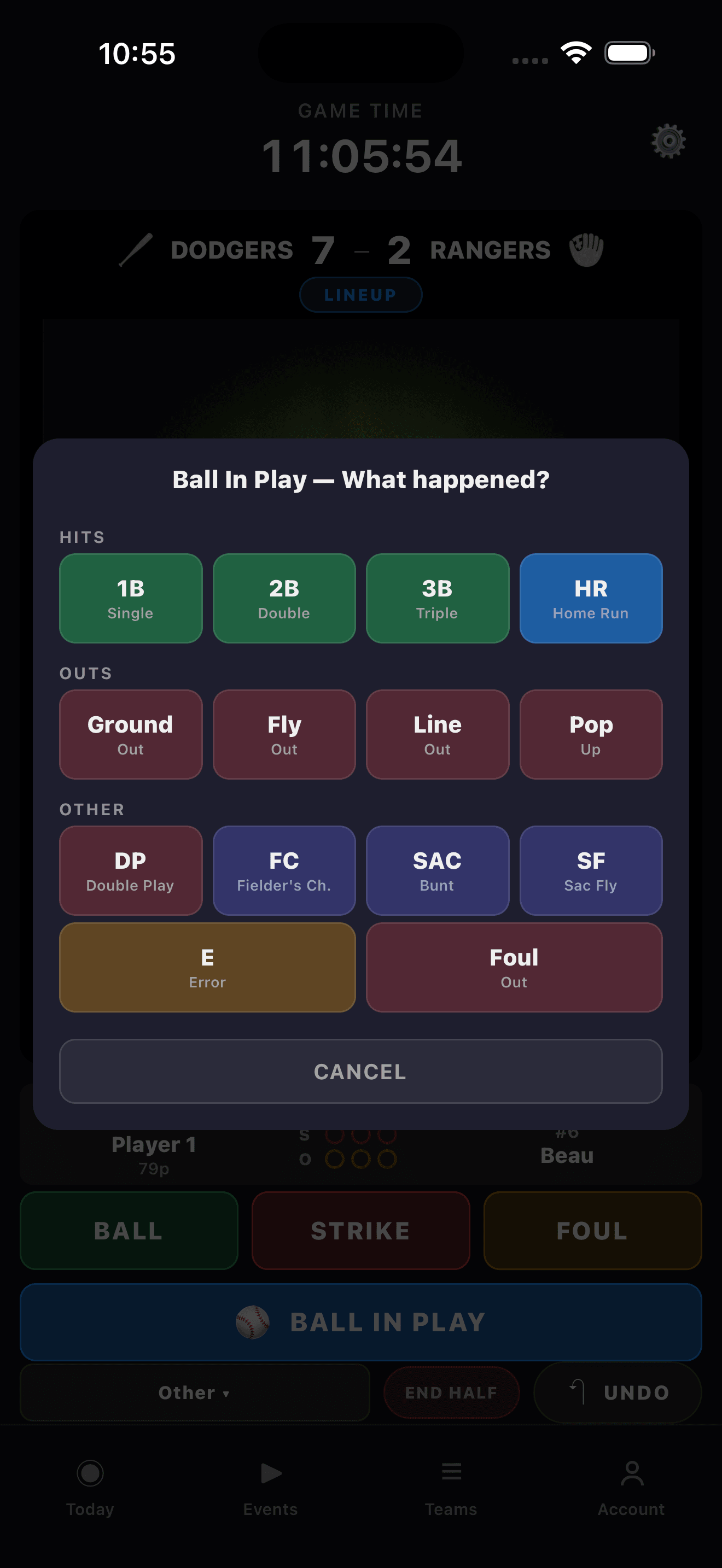
Whether a batter reaches on a clean single or a dropped third strike, Stathlon records it correctly and builds the box score as you go. No abbreviation memorization required — just tap what happened, and the stats take care of themselves.
Ready to put this into practice?
Stathlon lets you score flag football games with a tap — touchdowns, PAT choices, safeties, and full quarter tracking. All from your phone.
Continue Reading
Baseball Scoring Glossary: Stats, Abbreviations & How to Read a Box Score
A comprehensive glossary of baseball scoring abbreviations, defensive position numbers, batting and pitching stats, and how to read a box score. Written for youth sports parents new to scorekeeping.
How to Score a Baseball Game: A Beginner's Guide
A practical guide for first-time baseball scorekeepers. What to track, how innings work, and how to record runs, hits, errors, and outs without getting lost.
Understanding Baseball Pitch Counts and Rest Rules
A parent-friendly guide to Little League pitch count limits by age, mandatory rest days, and why these rules exist. Includes the official thresholds for ages 6-16.