Rally Scoring Explained
How rally scoring works in volleyball, why it replaced side-out scoring, and what it means for scorekeepers.
What Is Rally Scoring?
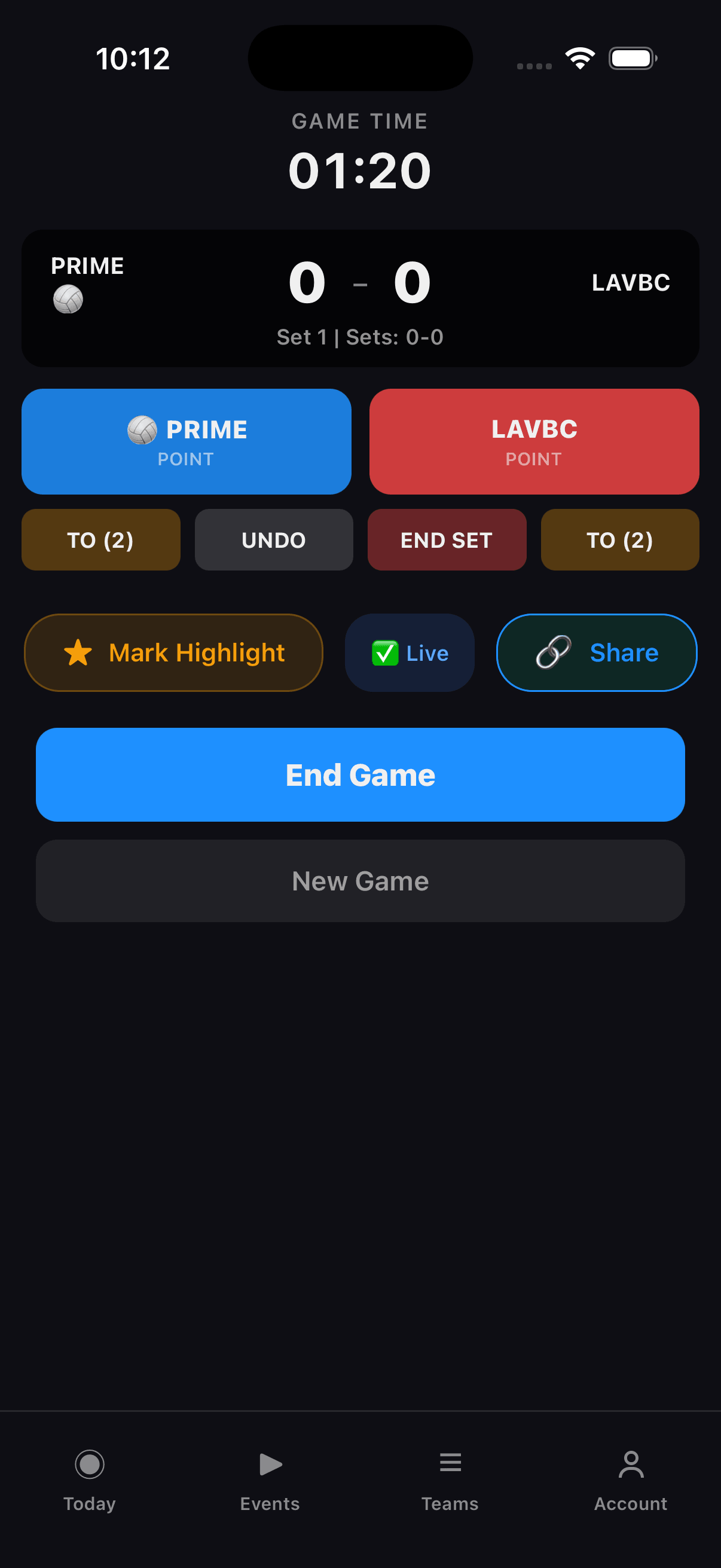
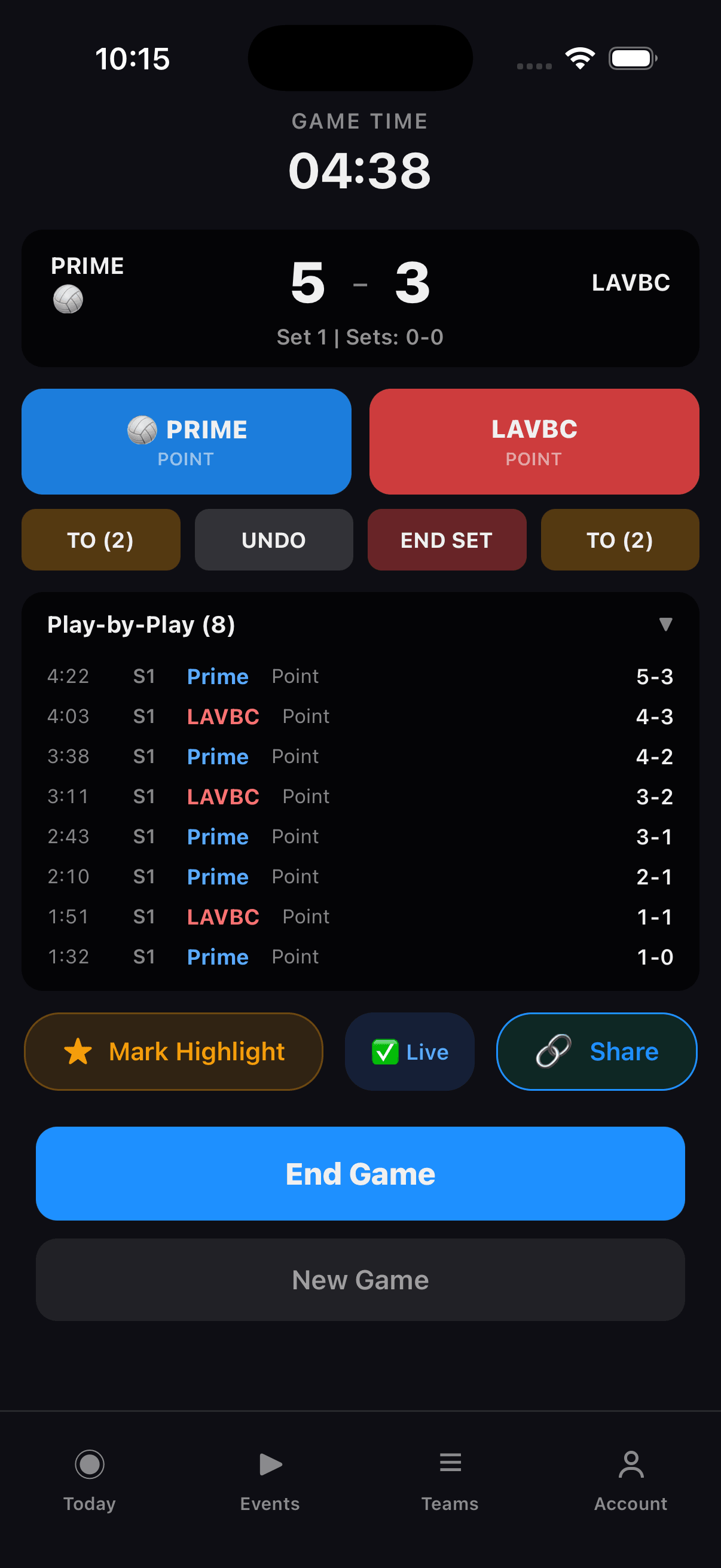
Rally scoring is simple: a point is scored on every rally, no matter which team served. The rally ends, someone gets a point. That's it.
This is the only scoring system used in modern volleyball. Every league, every tournament, every level — from 10-year-olds in rec league to the Olympic final — uses rally scoring.
If you're keeping score for the first time, this is the one rule you need to internalize: every rally = one point for one team.
How Rally Scoring Works in Practice
Here's what happens during a rally under rally scoring:
- Team A serves the ball
- Teams play the rally — passing, setting, attacking, blocking
- The rally ends (ball hits the floor, goes out, or a fault is called)
- Whichever team won the rally gets 1 point
- If the receiving team won, they also get the serve (this is called a side-out)
- If the serving team won, the same server serves again
That's the entire system. No exceptions, no special cases.
Side-Out Scoring: The Old System
Before rally scoring, volleyball used side-out scoring. Under this system:
- Only the serving team could score points
- If the receiving team won the rally, they didn't get a point — they just got the serve back (a "side-out")
- You had to win the serve and then win the next rally to actually score
Why did it change?
Side-out scoring made volleyball matches unpredictable in length and difficult to broadcast. A single set could last over an hour if teams kept trading side-outs without scoring. This created problems for:
- TV scheduling — broadcasters couldn't predict when matches would end
- Tournament planning — organizers couldn't schedule court time reliably
- Fan engagement — long stretches without any scoring felt slow
Rally scoring fixed all of these problems. Matches now have a predictable pace because the score advances on every rally.
Rally Scoring (Modern)
- Point on every rally, regardless of server
- Sets played to 25 (15 in deciding set)
- Typical set: 20-30 minutes
- Used universally since early 2000s
- Predictable match length for TV and tournaments
Side-Out Scoring (Old)
- Only serving team can score
- Sets played to 15
- Typical set: 30-60+ minutes
- Phased out between 1999-2003
- Unpredictable length — problematic for scheduling
When Did Volleyball Switch?
The transition happened gradually:
| Level | Year Adopted |
|---|---|
| International (FIVB) | 1999 |
| NCAA women's | 2001 |
| NCAA men's | 2001 |
| US high school (NFHS) | 2003 |
Some recreational leagues held onto side-out scoring longer, but by the mid-2000s, rally scoring was universal.
What This Means for Scorekeepers
If you're keeping score today, you only need to know rally scoring. But understanding the old system helps explain a few things you might encounter:
The term "side-out"
You'll still hear players, coaches, and announcers say "side-out." It now simply means the receiving team won the rally — they get the point and the serve. The term survived even though its original meaning (winning the rally without scoring) no longer applies.
Scoring pace
Under rally scoring, sets move quickly. A set to 25 typically takes 20-30 minutes. As a scorekeeper, you need to stay focused — there's no downtime between scoring opportunities because every rally is a scoring opportunity.
Game strategy differences
You might notice teams taking more risks on serve receive under rally scoring, because a missed serve (service error) gives the opponent a point. Under the old system, a service error just gave up the serve with no point penalty. This is why you see cautious serving at crucial moments — a service error at 24-24 directly costs a point.
Rally Scoring and Set Structure
Rally scoring determines how quickly sets progress, but the set structure has rules of its own:
- Standard sets are played to 25 points, win by 2
- Deciding sets (the last possible set in a match) are played to 15 points, win by 2
- There is no point cap — a set continues until one team leads by 2
For a complete breakdown of how sets and points work together, see our Complete Guide to Volleyball Scoring.
The Bottom Line
Rally scoring means one thing for you as a scorekeeper: every rally, give one team a point. You don't need to check who served before awarding the point. You just need to see who won the rally.
It's the simplest part of the job, and once it clicks, the rest of scorekeeping flows naturally from it.
Ready to put this into practice?
Stathlon lets you score games, stream live video, and capture highlights — all from your phone. The scoring interface is designed so everything you just learned applies directly.
Continue Reading
Complete Guide to Volleyball Scoring
Everything you need to know about volleyball scoring — from rally scoring basics to win-by-two rules and set structure.
How to Keep Score at a Volleyball Game
A step-by-step guide for volunteer scorekeepers at volleyball games. What to bring, how to set up, what to do during the match, and how to handle the unexpected.
Scorekeeping for Beginners — A Parent's Guide to Youth Sports
New to scorekeeping? A practical guide covering volleyball, flag football, and soccer. What to track, common mistakes, and how apps like Stathlon make it easier.